



"After months of investigation, including undercover interviews with doctors throughout 12 provinces in China, we come to the regrettable conclusion that these allegations are true."
-- David Kilgour, Former Canadian Secretary of State (Asia-Pacific)
INTRODUCTION
Findings: Freedom of Religion
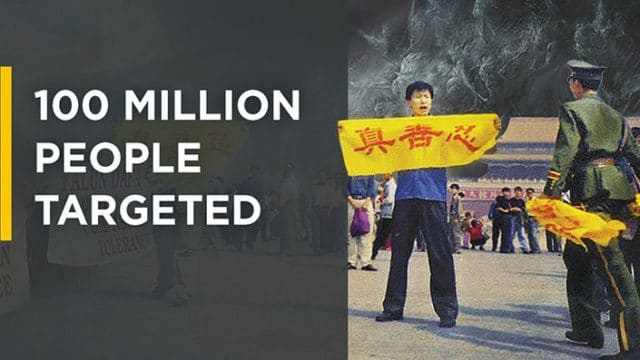
Since July 1999, the Chinese Government and Communist Party have designated Falun Gong an illegal ‘‘cult organization’’ and implemented a ‘‘strike hard’’ campaign of suppression against it—the scope and intensity of which have been unrivaled in the seven years since the Commission began its work. 2009 marked the 10th anniversary of the government’s formal ban on Falun Gong, a spiritual movement based on the teachings of its founder, Li Hongzhi, and Chinese meditative exercises called qigong. Viewing the 10th anniversary as sensitive, the central government held fast in 2009 with its 2008 pre-Olympics efforts to ferret out and punish Falun Gong practitioners. Authorities conducted propaganda campaigns that deride Falun Gong, carried out strict surveillance of practitioners, detained and imprisoned large numbers of practitioners, and subjected some who refuse to disavow Falun Gong to torture and other abuses in reeducation through labor facilities. International media and Falun Gong sources also reported deaths of practitioners in Chinese police custody in 2008 and 2009.
‘‘Strike hard’’ directives and ‘‘sensitive’’ anniversaries
The high priority that Party leaders place on the ‘‘struggle’’ against Falun Gong was demonstrated by its inclusion as a principal target for a ‘‘strike hard’’ campaign in a directive that set the agenda for public security bureaus (PSB) nationwide this year.123
In February 2009, the Central Committee on the Comprehensive Management of Public Security circulated a directive that urged PSB forces to ‘‘closely watch out for and strike hard against . . . infiltration, subversion, and sabotage by ‘Falun Gong.’’’124 In November 2008, the People’s Daily reported that the Communist Party Secretary of Weifang municipality in Shandong province—a city where police tortured at least 12 Falun Gong practitioners to death in 2000 and where more than 60,000 were estimated to reside before the ban125—urged Party cadres not to relent in the crackdown: ‘‘we must not loosen our hold on the struggle with ‘Falun Gong’ in the slightest way. [Officials] at all levels must firmly grasp the objectives, go a step further to intensify measures, increase the force . . . make great efforts to carry out deep strikes against ‘Falun Gong’ . . . [and] maintain a state of high pressure from the beginning to end.’’126 In May 2009, Gaoyou city in Jiangsu province issued an ‘‘implementation plan’’ that aimed to ‘‘raise the people’s understanding and support for the work of disposing of the ‘Falun Gong’ problem . . . [in order to] resolutely stop the spread of ‘Falun Gong.’’’127 A lecturer at the Jilin Provincial Public Security Bureau Academy recently described the ‘‘anti-cult struggle’’ as an ‘‘unrelenting protracted war,’’ and reiterated the government’s ‘‘determination’’ to ‘‘thoroughly eliminate the cult cancer.’’128 The Wanquan County PSB in Hubei province reported plans in May to ‘‘forcefully strike against ‘Falun Gong’ diehard elements’’ by ‘‘strengthening patrols, forming a tight network of control, obtaining deep, behind-the-scenes intelligence, and getting to the point that we know when the enemy will move, before the enemy can move.’’129
Chinese authorities placed the anti-Falun Gong campaign prominently on the agenda of a special public security taskforce called ‘‘Project 6521,’’ which reportedly was established to maintain ‘‘social stability’’ during four sensitive anniversaries in 2009, including the 10th anniversary of the April 25 Falun Gong silent demonstration near the Party leadership compound in Beijing.130 [Note 130: Each of the four digits signifies the number of decades that will have elapsed in 2009 since four significant events took place: 6 decades since the founding of the PRC, 5 decades since the Lhasa uprising in Tibet, 2 decades since the Tiananmen crackdown, and 1 decade since the ban on Falun Gong. The presence of two of China’s top leaders at the helm of Project 6521, Vice President Xi Jinping and Zhou Yongkang, indicates the importance that the Party assigns to its political ‘‘struggle’’ against Falun Gong. Xi Jinping is also presumed by most experts as the leader most likely to replace Hu Jintao as Party General Secretary and President. Provincial and municipal governments were reportedly required to set up temporary 6521 taskforces led by the local deputy Party secretary and public security chief while county and township authorities were instructed to report their implementation of Project 6521 to the municipal and provincial taskforces.]
District officials in Guiyang city, Guizhou province, reported on ‘‘deployment arrangements’’ taken to implement two ‘‘monitoring and control measures’’ during the 10th anniversary of the April 25 Falun Gong protest: (1) ‘‘take strict precautions to prevent ‘Falun Gong’ from conducting illegal activities and putting up posters and distributing propaganda materials’’; and (2) ‘‘local police stations, community neighborhood committees, and public work units must strengthen efforts to root out and strike against Falun Gong . . . and in a fundamental way, eliminate hidden dangers.’’131 In Shanghai’s Nanhui district, Party officials called an ‘‘emergency meeting’’ to focus on the ‘‘April 25 period,’’ urging police and government officials to ‘‘sharpen their vigilance’’ and ‘‘strengthen coordinated warfare’’ against Falun Gong.132 In Tianjin municipality, officials increased police patrols and intelligence gathering focused on Falun Gong practitioners during the 20th anniversary of the violent suppression of the 1989 Tiananmen protests.133
The 6–10 office
In the past year, the 6–10 Office—an extralegal, Party-run security apparatus created in June 1999 to implement the ban against Falun Gong—continued to consolidate its central role in all aspects of the nationwide ‘‘anti-cult’’ campaign. A June 2009 official report from Henan province summarizes the role of the Chenxi County 6–10 Office as ‘‘taking charge of the supervision, inspection, direction, coordination, and implementation of the entire county’s anti-cult work.’’134 The duties of the secretariat of the 6–10 Office include ‘‘taking responsibility for protecting secrets’’ and ‘‘supervising and solving special investigations and coordinating the work of striking against and disposing of [Falun Gong].’’135 In December 2008, Li Xiaodong, the head of the central 6–10 Office, visited Siyang county in Jiangsu province for an inspection and told local officials: ‘‘As for the cult problem, the Ethnic and Religious Affairs Bureau must vigorously cooperate with judicial offices in conducting strikes; as soon as you discover a group, simply attack it, as soon as it shows its head, hit it right away, you must never be softhearted.’’136 The
6–10 Office in Jiangsu’s Suzhou city conducted ‘‘spot checks’’ in December on community and school ‘‘no-cult’’ projects in the Canglang district.137 Officials noted how the Canglang Party Committee and government ‘‘attach a high degree of importance’’ to the 6–10 Office’s work and that it had received a ‘‘full guarantee’’ of funding and personnel.138
The 6–10 Office and public security bureaus throughout China surveilled and monitored communities, residences, and workplaces in order to identify and isolate Falun Gong adherents. In May 2009, the Qidong city 6–10 Office in Jiangsu province conducted an ‘‘investigation to get to the bottom of the situation involving cults,’’ which identified 176 Falun Gong practitioners living in one township.139 In October 2008, Linxiang city in Hunan province gave credit to its ‘‘24-hour control and monitoring line of vision’’ for allowing authorities to ‘‘thoroughly suppress’’ two Falun Gong incidents.140 In June 2008, Xuanwei city authorities in Yunnan province called for strengthened patrols, greater use of plainclothes officers, and closer cooperation between public security forces and residential committees in order to ‘‘thoroughly shatter’’ Falun Gong.141 Xuanwei authorities also authorized a ‘‘powerful political offensive’’ in all villages and neighborhoods involving mandatory resident participation in a propaganda campaign to ‘‘effectively frighten’’ Falun Gong.142
In Shandong province’s Huimin county, a 2008 workplan for ‘‘implementing concentrated rectification’’ of Falun Gong requires various agencies to investigate all religious personnel within their jurisdiction for involvement with ‘‘cult organizations.’’143In March 2009, the head of the Shashi District 6–10 Office in Jingzhou city, Hubei province, during an inspection of sub-district offices, called on officials to ‘‘reinforce monitoring and control of ‘Falun Gong’ practitioners.’’144 In June 2009, Jiujiang city officials in Jiangxi province described a surveillance system focused on a group of 829 ‘‘key figures,’’ composed primarily of former Falun Gong prisoners.145 In July, authorities in Shandong province’s Zibo city placed nine practitioners under a ‘‘system of 24-hour monitoring and control.’’146
Identification and monitoring of Falun Gong practitioners is also accomplished through the 6–10 Office’s cultivation of paid informants. The aforementioned circular from Xuanwei city offered a reward of 10,000 yuan (US$1,464) for each Falun Gong practitioner who is captured distributing ‘‘reactionary propaganda’’ and 5,000 yuan (US$732) for informants who ‘‘provide clues to crack a case.’’147 In March 2009, Linzi district in Shandong’s Zibo city unveiled a reward system for citizen reports of Falun Gong activities.148 The 6–10 Office in Liuyang, a county-level city under Hunan province’s Changsha municipality, launched a 24-hour hotline for informants in March and announced rewards of between 50 and 1,000 yuan (US$7 and US$146).149 In April 2009, the Liuyang 6–10 Office issued an open letter that called for residents to ‘‘resolutely resist cults’’ and promised an ‘‘appropriate material reward’’ to those who ‘‘courageously report cult behavior.’’150 The Wangcang County Communist Party Committee and government in Sichuan province issued a joint letter in April to rural residents that outlined the ‘‘severe danger’’ posed by Falun Gong, provided residents with a ‘‘cult’’ hotline, and guaranteed rewards for informants.151 Authorities in Anhui province’s Bengbu city credited an informant’s call for facilitating the capture of a 50-year-old disabled Falun Gong practitioner named Yu Xiaoping who was distributing leaflets.152
The 6–10 Office focuses on public schools and universities as venues for spreading its ‘‘anti-cult’’ message. In May 2009, the Xinjiang Agricultural University initiated a 10-month campaign to ‘‘build a durable ideological line of defense’’ to ‘‘guard against and resist’’ possible ‘‘sabotage and infiltration’’ by Falun Gong.153 In June, students and teachers from middle schools all across Panji district in Anhui’s Huainan city participated in a ‘‘surge of anti-cult education’’ that ‘‘raised their political consciousness.’’154In July, elementary school students in Leshan city, Sichuan province, attended a ‘‘lively’’ speech from the local Party secretary and viewed an ‘‘anti-cult warning film.’’ The principal instructed students to study ‘‘anti-cult’’ materials during the summer, take notes or write a comic book to illustrate lessons learned, and return a form with a parent’s signature to verify completion of the assignment.155
Banned Protestant groups and the 6–10 office
The Chinese Government continues to categorically prohibit some Protestant groups from exercising religious freedom by criminalizing their communities as ‘‘cult organizations.’’327 The government has banned at least 18 Protestant groups with adherents in multiple provinces, though many more Protestant congregations and movements have been banned that are active within only one province. 328 The threat of ‘‘cult’’ designation is a powerful tool for authorities seeking to intimidate and control unregistered Protestants. Three-Self Patriotic Movement (TSPM) leaders have invoked the specter of Falun Gong to persuade Protestants to embrace the theological reconstruction campaign. Ding Guangxun, former TSPM chairman, has warned Protestants that they ‘‘will not have a future’’ if they ‘‘begin to resemble Falun Gong or some other cult.’’329
DETENTION, ABUSE AND DEATH IN CUSTODY
Reeducation Through Labor
The reeducation through labor (RTL) system operates outside of the judicial system and the PRC Criminal Procedure Law (CPL); it is an administrative punishment that enables law enforcement officials to incarcerate Chinese citizens at RTL centers for a maximum initial period of three years, with the possibility of an extension of up to one year.152 According to the non-governmental organization Chinese Human Rights Defenders, public security departments ‘‘control the entire process of sending an individual’’ to an RTL center, and RTL is frequently used to punish, among others, dissidents, petitioners, Falun Gong adherents, and religious practitioners who belong to religious groups not approved by the government.153 Earlier this year, Professor Fu Hualing, head of the Department of Law at the University of Hong Kong, wrote that RTL ‘continues to be used extensively, for political control and persecution.’’154
…Chinese authorities continue to employ an extrajudicial system of incarceration known as ‘‘reeducation through labor’’ (RTL) to punish multitudes of Falun Gong practitioners. Public security officials may order citizens who are suspected of minor criminal or political offenses to serve up to three years of RTL without establishing their guilt before a court.156 According to one scholar, authorities have ‘‘maximized’’ the RTL system as an ‘‘instrument for political control’’ over Falun Gong.157 In 2008, the Beijing Women’s RTL Center reportedly held 700 Falun Gong practitioners compared to only 140 prisoners accused of other crimes.158 In February 2009, more than half of 13 former RTL inmates interviewed for one study—none of whom were practitioners—noted that Falun Gong constituted one of the largest groups of RTL prisoners and that they are singled out for harsh treatment.159
[Note 159: One interviewee remarked that practitioners were often deprived of sleep until they renounced their beliefs and that some were forced to sit on a ‘‘tiger bench.’’ According to Falun Gong sources, a ‘‘tiger bench’’ is a small iron bench that is approximately eight inches tall. The victim’s hands are tied together behind his/her back while his/her knees are tied down to the bench. Hard objects such as bricks are often inserted under the tied legs to cause the legs to bend upward in a painful manner that sometimes causes the knees to break. CECC staff interviews with two Falun Gong practitioners formerly detained in RTL and now based in the United States confirmed the use of sleep deprivation and solitary confinement in RTL facilities, as well as cases where practitioners are forced to sit stationary on a small stool for up to 18 hours at a time. Other inmates are often placed in the cell and promised a reduced sentence if they ensure that the practitioner does not move from the stool.]
As security intensified ahead of the 10th anniversary of the ban, the ‘‘strike hard’’ campaign resulted in widespread detentions and imprisonment of Falun Gong practitioners. In the first half of 2008, Harbin municipality authorities in Heilongjiang province placed 53 Falun Gong practitioners in criminal detention, 23 in administrative detention, formally arrested 23, and ordered 19 to serve RTL.160 In November 2008, Nanning municipality authorities in the Guangxi Zhuang Autonomous Region reported that they had taken 36 Falun Gong practitioners into custody, formally arrested 10, held 15 in administrative detention, and sent 3 to RTL.161 In December 2008, authorities in Pingjiang county, Hunan province, detained two Falun Gong ‘‘core elements’’ and ‘‘destroyed’’ an underground printing operation as part of a workplan to ‘‘ruthlessly strike against’’ Falun Gong.162 In February 2009, Dazhou municipality in Sichuan province disclosed that public security officials had detained 114 practitioners and ‘‘destroyed’’ 11 Falun Gong ‘‘gangs’’ and 17 ‘‘underground nests’’ in three years.163 Huai’an city officials in Jiangsu province noted that they had ‘‘cracked’’ more than 20 cases in the first half of 2009 that resulted in Falun Gong detentions.164
In addition to forced labor, RTL for Falun Gong practitioners involves a process known as ‘‘transformation’’ whereby they are subjected to various methods of physical and psychological coercion until they recant belief in Falun Gong.165 In January 2009, Sichuan Provincial Party leaders inspected the Xinhua RTL center where 42 male Falun Gong practitioners were detained. RTL authorities told Party leaders that their ‘‘unique model of transformation’’ had recently succeeded in reforming a group of ‘‘die-hard’’ practitioners.166 In June 2009, the Inner Mongolia Autonomous Region Justice Bureau described the Hohhot Women’s RTL Center as a ‘‘main battlefield’’ in the ‘‘struggle’’ against Falun Gong, where a total of 518 practitioners had been ‘‘transformed.’’167 The Assistant Director of the Jiangxi Provincial RTL Management Bureau pressed his subordinates to ‘‘increase awareness of the importance of this particular year to our transformation work and understand the urgency of overcoming the current low rate of transformation.’’168 In July 2009, Party leaders in Heilongjiang’s Tailai county redoubled their efforts to ‘‘transform’’ one local practitioner who was reportedly the sole holdout among 212 others who had already ‘‘thoroughly transformed.’’169
Cases of torture and death of Falun Gong practitioners in official custody, both confirmed and alleged, continued to surface in the past year. Amnesty International reported that over 100 practitioners died in detention or shortly after release in 2008 as a result of torture or other forms of mistreatment.170 In February 2008, a popular musician and Falun Gong practitioner named Yu Zhou died in Beijing police custody 11 days after he and his wife were detained. Authorities refused to allow an autopsy and Yu’s family suspects that he was beaten to death.171 In March 2009, a public security officer at the Shibei District Liaoyuan Road PSB station in Qingdao reportedly beat Lu Xueqin, a Falun Gong practitioner, for nine days until she was permanently paralyzed from the waist down.172 In July 2009, a 45-year-old practitioner named Yang Guiquan was reportedly declared dead upon arrival at the Fuxin City Mining Corporation General Hospital in Liaoning province after being held for 16 days by police and reportedly beaten with electric batons and force-fed.173
Secret detention facilities and disappearances
‘‘Legal education classes’’ (fajiaobanorxuefaban) or ‘‘study classes’’ (xuexiban), are another form of secret detention used by the Chinese Government.106 Officials forcibly detain petitioners, Falun Gong practitioners, and other ‘‘undesirables’’ in illegal detention sites where they are, on occasion, forced to study the ‘‘error’’ of their ways with the goal that they achieve a new understanding and cease their conduct.107
Religious Prisoners
Authorities continue to detain, formally arrest, and in some cases imprison Chinese citizens for exercising their right to freedom of religion.367 Such cases include:
• Liu Jin, a librarian at Shanghai Normal University, whom authorities held for nearly a year in pretrial detention. The Fengxian District People’s Court in Shanghai convicted Liu under Article 300 of the PRC Criminal Law for downloading Falun Gong materials from the Internet and distributing them. She was sentenced to three-and-a-half years in prison on November 14, 2008.
• Xu Na, an artist and poet, and her husband, Yu Zhou, a popular musician, whom public security officials detained on the night of January 26, 2008, for possessing documents and computer disks containing Falun Gong materials. Yu died 11 days later in police custody. The Beijing Chongwen District People’s Court sentenced Xu to three years in prison on November 25, 2008, for ‘‘using a cult organization to undermine the implementation of the law’’ (PRC Criminal Law, Article 300)
Organ Transplants in China: Developments and Controversies
In the past year, allegations of organ harvesting from nonconsenting Falun Gong prisoners have emerged again, further raising concerns about possible abuses in China’s organ transplant industry. In December 2008, the UN Committee against Torture (UNCAT) indicated in its report on China that the UN Special Rapporteur on Torture, Manfred Nowak, had noted ‘‘an increase in organ transplant operations coincides with the ‘beginning of the persecution of [Falun Gong practitioners],’’’ and had urged the Chinese government to provide ‘‘a full explanation of the source of organ transplants.’’111In an August 2009 interview, Nowak noted that ‘‘[i]t remains to be seen how it could be possible that organ transplant surgeries in Chinese hospitals have risen massively since 1999, while there are never that many voluntary donors available.’’112 The UNCAT’s reference to a relationship between the increase in organ transplant operations in China in the last decade and the unexplained source of organ supply was first documented in a 2006 investigative report (updated in 2007) produced by a former senior Canadian government official and a prominent human rights attorney.113 The 2006 report also provided transcripts of telephone calls to detention facilities and transplant centers in China, where officials there confirmed the availability of organs from Falun Gong prisoners.114In November 2008, an American think tank researcher who was investigating allegations of organ harvesting in China reported that 16 interviews he conducted with Falun Gong practitioners who were formerly incarcerated yielded details of ‘‘inexplicable’’ medical testing that seemed focused on organ examination.115
FREEDOM OF EXPRESSION
Government Regulation of the News Media and Publishing
The government continued its campaign to target publications for their political and religious content. Chinese regulations include vague and sweeping prohibitions on the publication of material that ‘‘undermine the solidarity of the nations, or infringe upon national customs and habits,’’ ‘‘propagate evil cults or superstition,’’ or ‘‘harms the honor or interests of the nation.’’
• In December 2008, GAPP issued a notice calling on customs officials to focus on ‘‘illegal publications’’ and ‘‘‘Falun Gong’ and other ‘cults’ propaganda materials.’’
• In April and May 2009, local and provincial governments across China issued notices launching a special campaign targeting ‘‘illegal political publications.’’ The Fujian Provincial Transport Administration Department, for example, issued a notice that placed the focus on publications that ‘‘slandered the country’s political system, distorted the history of the Party, the country’s history, the military’s history, slandered the Party and the country’s leaders, publicized ‘Falun Gong’ and other evil cults, and incited ethnic splittism.’’
… Officials also continued to restrict peaceful religious expression, confiscating or punishing the distribution of unapproved bibles, Muslim books, Falun Gong documents, and other ‘‘illegal’’ religious materials, and restricting religious sermons, interpretations of religious texts, and the ability of citizens to proselytize or teach religion to their children.
… Officials targeted for closure publications containing political or religious content dealing with Falun Gong, Tibetan areas of China, or the Xinjiang Uyghur Autonomous Region (XUAR) or publications by organizations that did not have a license to publish.
Internet Freedom: Active filtering and removing of political and religious content
This past year, officials and companies continued to filter political and religious content critical of China’s top leaders, human rights record, policies toward Tibetan areas of China and the Xinjiang Uyghur Autonomous Region, and information relating to Falun Gong and the 1989 Tiananmen protests.183 In April 2009, China Digital Times reported that Chinese Internet users were circulating leaked documents from Baidu, which runs China’s top search engine.184 The documents provide lists of topics and words to be censored, including references to petitioners, the 1989 Tiananmen protests, Falun Gong, and China’s leaders.185
Green Dam
In May 2009, the Ministry of Industry and Information Technology (MIIT) issued a circular requiring that computers sold within mainland China after July 1, 2009, must come ‘‘pre-installed’’ (yu zhuang) with the government-approved ‘‘Green Dam-Youth Escort’’ Internet browsing filtering software.204 […] Tests conducted by several outside sources found that, in addition to pornographic content, the software also filtered political and religious information, including references to Falun Gong. OpenNet Initiative (ONI), one of the groups that tested the software, also found that the software ‘‘actively monitors individual computer behavior.’’207
HARASSMENT OF ATTORNEYS, COURT IRREGULARITIES, COERCED CONFESSIONS